Pages

Friday, 27 June 2014

The Vege Car: Reading activities for Week 8, Term 2, 2014


SCHOOL JOURNAL PART 3 NUMBER 1, 2007, PAGES 8 - 15

The Vege Car by Peter Stevens
WALT: Use inferencing strategy to find answers to questions based on the text.
Success Criteria: I know I have used the inferencing strategy when I have done the following to look for an answer:
*look for clues around the text,
*re-read the text,
* sound out the question and look for key words in the question, *discuss with a buddy.
* form a picture of the question and then try and answer it.
* read on while looking for the correct answer.

Activity 1 - Reading Response
Read this article and then answer the questions based on the text.
1. Why did James Nui decide to build a car that didn’t use petrol?
James nui decided to build a car that didn’t use petrol because he wanted to protest against the war in Iraq and to save money.
2. What are some of the dangers caused by the nasty gases that come out of the
cars that use petrol?
Some of the dangers caused by the nasty gases that come out of the cars that use petrol is that it emits nasty chemicals into the earth that could cause illnesses.
3. How did James Nui prove that his Vege car was as good as any other car?
James nui proved that his Vege car was as good as any car by driving from one end of the country to the other.
4. If you decided to get more information on the Vege car, what would you do?
If I got more information on the vege car, I might buy one.
5. Where were James Nui and James iti when they got a speeding ticket?
James Nui and James Iti were somewhere in between Christchurch and Blenheim.
Activity 2 - Vocabulary
Write down the meanings of these words and then make sentences with these words.

1. working  - the action of doing work.
2. surprised - something unexpected.
3. opinion - a view or judgement formed about something.
4. important - of great significance or value.
5. grumbling - complain or protest about something in a bad tempered but typically muted way.
6. vegetable - a plant or part of a plant used as food, that is healthy.
7. natural - existing in or caused by nature, not made or caused by mankind.
8. reliable - consistently good in quality or performance and is able to be trusted.
9. interested - showing curiosity or concern about something or someone.
10. different - not the as another or each other.

Activity 3 - Article Review
Write an article review for this article and take a screenshot of a picture from the article and put it up on your Blog after it has been checked by your teacher.

Article Review:
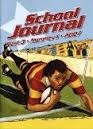
This article is about a man named James Nui. He made his car environment friendly by changing his oil from toxic gases to vegetable oil, and it was also recyclable. He also did that to protest against the war in Iraq. Then him and his eldest son, James Iti proved people that the car that went on vegetable oil could actually work by driving from one end of the country to another. They even stopped at the Parliament house in Wellington.
Tuesday, 17 June 2014

Pollution


Pollution is when people litter instead of throwing their rubbish into the bin. There are three types of pollution: Land, Air and sea pollution. These are all bad for the environment.

Air pollution is when mufflers on the back of vehicles emit smoke that is bad for the environment and human beings. The smoke is gas and gas has chemicals in it.

Land pollution is when we litter on the ground, and other people have to pick it up.

Sea pollution is similar pollution. People litter, and when it rains, the rubbish gets into the drains that leads to the sea, and the rubbish eventually ends up into the sea, killing all of the marine life in the sea.

Sea pollution can also be caused by boats that use diesel or gases that have chemicals in them that also kill the marine life.

Pollution is bad for people and animals.

Monday, 9 June 2014

The Water Cycle


The Water Cycle
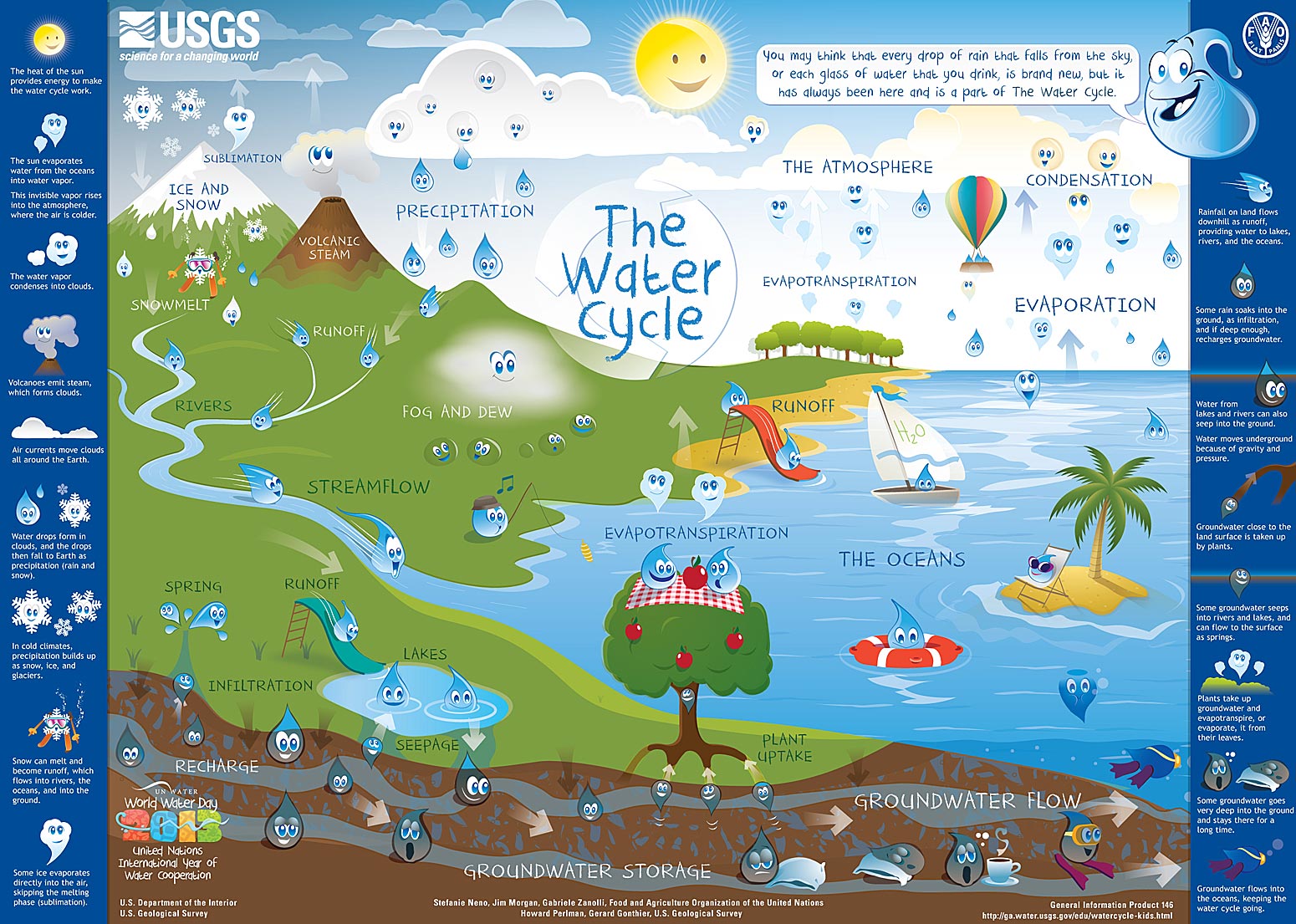
This is what happens in the water cycle.
Evaporation:
Heat from the sun causes water on earth ( in oceans, lakes etc) to evaporate ( turn from liquid into gas) and rise into the sky. This water vapour collects in the sky in the form of clouds. This process is called evaporation.

Condensation:
As water vapour in the sky cools down, it becomes water again. This process is called condensation.

Precipitation:
Water falls from the sky in the form of rain, snow, hail or sleet. This process is called precipitation.

Collection:
Oceans and lakes collect the water that has fallen. Water evaporates back into the air and the cycle continues.

This is the link where I got the information from:

Thursday, 15 May 2014

Types of fishing methods.


Types of fishing methods:

Although there are many methods of catching fish, they fall into three main groups:
1. Catching fish singly or in schools by use of nets or spears
2. Trapping fish in stationary gear, such as fish traps or set nets
3. Attracting fish to get caught on hooks by use of bait, artificial lures or other means such as light
Before you go fishing you must decide what is the best method to use. There are many factors to consider - especially if you are a commercial fisher. Factors include:
  • where you are fishing
  • what species you are fishing for
  • the weather and sea conditions
  • the cost of the boat, gear and fuel
  • the market requirements

This is the link where I got my information from. You can visit it if you want to find out more information.

http://www.fish.govt.nz/en-nz/Commercial/About+the+Fishing+Industry/Fishing+Methods.htm

Hunting the Hunters by Mary Sutherland.


This article is about spiders. Here is some facts we found out by reading a article called Hunting the hunters. It was written by Mary Sutherland.:


  • Not all spiders catch their food in webs of sticky silk.
  • Some spiders hunt for their food, stalking and pouncing on their prey, in much the same way as a cat does.
  • Because many hunting spiders are night - shift workers, the best time to look for them is after dark.
  • Some spiders could have up to eight eyes, but six of them are like mirrors.
  • Six out of eight eyes of a spider reflects light.
  • Light travels in straight lines, so if you hold your torch at eye level and shine it down into the eyes of hunting spider, the light from the six eyes will reflect back in a straight line to the torch, and also on your eyes.
  • A wolf spider is the most common spider you will ever find in your garden.
  • If a spider is carrying an egg sac or even piggy - backing its babies, then you know it’s a female.
  • Most spiders are active at night, and this helps them to avoid being eaten by spiders.
  • Working at night has its disadvantages.

Wednesday, 14 May 2014

Facts about how waves are made.

Facts about how waves are made.

1. Waves are mainly a product of the wind.

2. Wind is the first step in the formation of surfable waves.


3. Local shore winds can also produce waves, but they can also destroy the quality of the breaking waves.

4. Onshore waves are typically known for creating choppy and bumpy waves because their effect is added to the direction of the waves.


5. In a way, offshore winds are a sort of a counterbalance. Swell comes from miles away and the ground wind works as a "pause-hold" effect on the wave face, allowing longer unbreakable waves.


If you would like to find out more, then you could visit this link below:
http://www.surfertoday.com/wave-height-forecast/9-wave-forecast/6760-how-is-a-wave-formed-understanding-swell-and-surf-forecasts.

Thursday, 10 April 2014

Reading Activity for Week 9 Term 1


SCHOOL JOURNAL PART 4 NUMBER 1, 1999, PAGES 26 - 28

Dianne’s Dream.  By Bill O’Brien

WALT: answer questions based on the text by looking for keywords in the questions.
Success Criteria: 1. I am able to identify and highlight the keywords in the question. 2. I am able to locate the keywords in the text and look for answers to the questions.

ACTIVITY 1 - READING RESPONSE
Read the text and then answer these questions based on the text.
1. Where did Dianne Hollands grow up?  Dianne Hollins grew up on a farm in Southland
2. What was Dianne's dream all about? Dianne’s dream was all about playing at Junior Wimbledon.
3. How long did Dianne spend training each day? Dianne spent training each day for at least 2 Hours.
4. What was Diannes greatest achievement? Dianne’s greatest achievement was when she joined Tsnuar Brown and Jane Ioaba as a member of the New Zealand at the Oceania World Junior qualifying Tournament
5. How old was Dianne when she won the Otago Premier Player of the Year? Dianne was 13 years old when she won the Otago Premier Player of the Year.

Activity 2 - Vocabulary
WALT:  1. Use an online dictionary. 2. Look for meanings of words from the text I have read.
Success Criteria: 1. I am able to use an online dictionary. 2. I am able to say  the meanings of words

Read page 1 of the story and look for these words in the text. Then use a dictionary to find the meanings of these words.

Words
Dictionary Meanings
1.   prestigious
Inspiring respect and admiration: having a high status.
2.   ambition
A strong desire to do or achieve something,typically requiring determination and hard work
3.   achievement
a thing done successfully,typically by effort,courage, or skill.
4.   tournament
A trial or skill in which competitors play  a series of contests.
5.   talent
A special natural ability or aptitude.
6.   dedicated
wholly committed to something, as to an ideal, political cause, or personal goal.
7.   professional
following an occupation as a means of livelihood or for gain.
8.   perfectionist
a person who adheres to or believe in perfectionism.
9.   popular
regarded with favour, approval, or affected by people in general
10. education
the act or process of imparting or inquiring general knowledge of something.